
Climate change is more than an environmental crisis.
It’s a major barrier to achieving the United Nations Sustainable Development Goals (SDGs). From food security and public health to clean water, biodiversity, and economic growth, climate change affects nearly every aspect of sustainable development. In this article, we explore how climate change impacts the SDGs and why urgent, integrated climate action is essential.
What Are the Sustainable Development Goals (SDGs)?
The Sustainable Development Goals (SDGs) are 17 global goals adopted by the United Nations in 2015 to create a more sustainable, equitable, and prosperous future by 2030. They address challenges such as poverty, hunger, health, education, gender equality, clean energy, climate action, and environmental protection.
Although SDG 13 (Climate Action) focuses specifically on climate change, its effects extend across almost every other goal, making climate action fundamental to sustainable development.
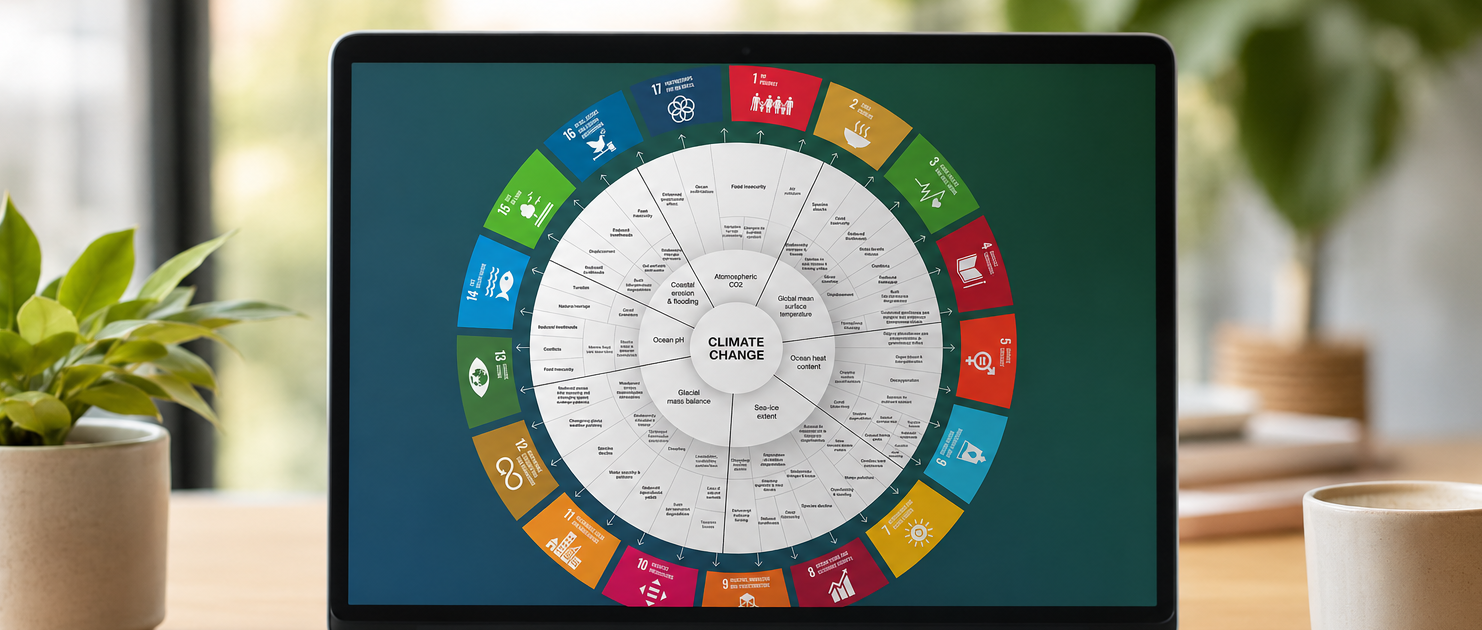
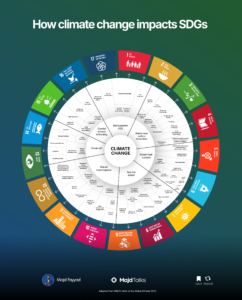
Our team created an infographic, adapted from the World Meteorological Organization’s (WMO) State of the Global Climate 2025 report, to highlight these critical connections.
How Does Climate Change Affect the SDGs?
Climate change acts as a risk multiplier, amplifying existing environmental, economic, and social challenges. Rather than impacting one sector at a time, its consequences are interconnected and often reinforce one another.
SDG 2: Zero Hunger
Climate change threatens global food security through:
- Lower crop yields caused by droughts, floods, and heatwaves
- Reduced agricultural productivity
- Changes in growing seasons
- Declining nutritional quality of staple crops due to elevated carbon dioxide levels
As extreme weather becomes more frequent, farmers face increasing uncertainty, making it more difficult to produce enough nutritious food for a growing population.
SDG 3: Good Health and Well-Being
Climate change poses serious risks to human health by increasing:
- Heat-related illnesses and deaths
- Air pollution and respiratory diseases
- The spread of vector-borne diseases such as malaria and dengue fever
- Mental health challenges following climate-related disasters
Protecting public health now requires strengthening climate resilience alongside healthcare systems.
SDG 6: Clean Water and Sanitation
Water resources are becoming increasingly vulnerable because of:
- Changing rainfall patterns
- Glacier retreat
- More frequent droughts
- Flood-related water contamination
These impacts threaten drinking water supplies, sanitation services, agriculture, and industrial production worldwide.
SDG 11: Sustainable Cities and Communities
More than half of the world’s population lives in urban areas, making cities particularly vulnerable to climate change.
Major impacts include:
- Rising sea levels
- Coastal flooding
- Damage to infrastructure
- Stronger storms
- Increased displacement of communities
Building climate-resilient cities is becoming a priority for sustainable development.
SDG 14: Life Below Water
The oceans absorb much of the Earth’s excess heat, but this comes at a cost.
Climate change is causing:
- Ocean warming
- Ocean acidification
- Coral bleaching
- Marine biodiversity loss
- Declining fish stocks
These changes threaten marine ecosystems, food security, and the livelihoods of millions of people who depend on healthy oceans.
SDG 15: Life on Land
Terrestrial ecosystems are under increasing pressure from climate change through:
- Habitat degradation
- More frequent wildfires
- Species migration
- Biodiversity loss
- Forest decline
Protecting nature is essential for maintaining ecosystem services that support human well-being and economic development.
SDGs 1, 8, and 10: Poverty, Decent Work, and Reduced Inequalities
Climate change also creates significant economic and social challenges.
It contributes to:
- Increased poverty
- Job losses in climate-sensitive sectors
- Reduced economic productivity
- Higher disaster recovery costs
- Greater inequality among vulnerable populations
Low-income communities are often the least responsible for greenhouse gas emissions yet face the greatest climate risks.
Why Climate Change Is a Risk Multiplier
Climate change rarely creates isolated problems. Instead, it triggers cascading impacts across multiple sectors.
For example:
- Water scarcity reduces agricultural production.
- Food shortages increase malnutrition.
- Poor nutrition worsens health outcomes.
- Economic losses deepen poverty.
- Poverty increases vulnerability to future climate disasters.
These interconnected effects demonstrate why climate change influences progress across nearly all of the Sustainable Development Goals.
Why Integrated Climate Action Matters
Achieving the SDGs requires more than reducing greenhouse gas emissions. Governments, businesses, researchers, and communities must work together to:
- Strengthen climate adaptation
- Protect ecosystems
- Invest in resilient infrastructure
- Support sustainable agriculture
- Improve water management
- Accelerate the transition to clean energy
- Promote social equity in climate policies
Integrated solutions deliver benefits across multiple SDGs simultaneously, making climate action one of the most effective investments for sustainable development.
Final Thoughts
Climate change is reshaping our world in ways that extend far beyond the environment. It affects food systems, public health, water resources, cities, biodiversity, economies, and social equity, making it one of the greatest challenges to achieving the Sustainable Development Goals.
Recognizing these connections helps policymakers, organizations, businesses, and individuals develop more effective solutions that address climate and development together.